


discover
KINLOCH ANDERSON
Sign up to our newsletter and receive exclusive offers and everything you need to know about Highland Dress!
You can unsubscribe at any time.
Email:
Article
Find your family tartan
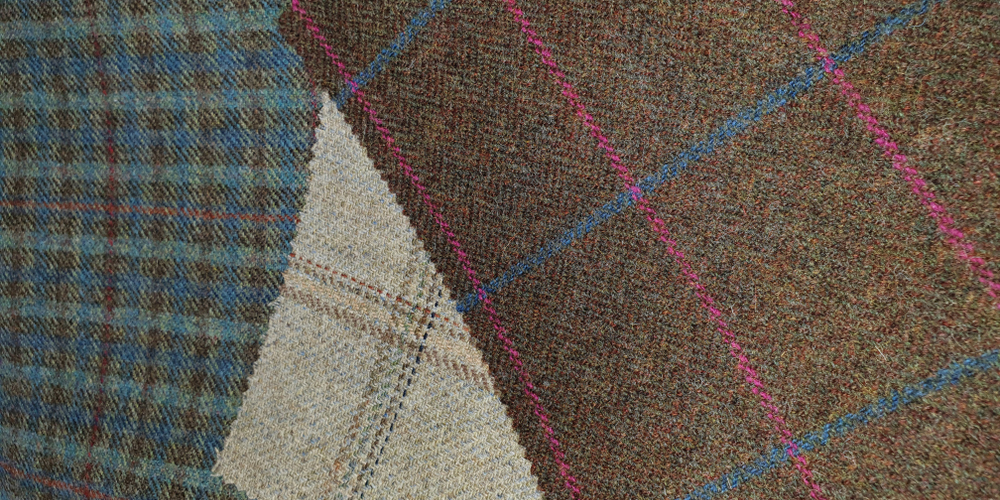
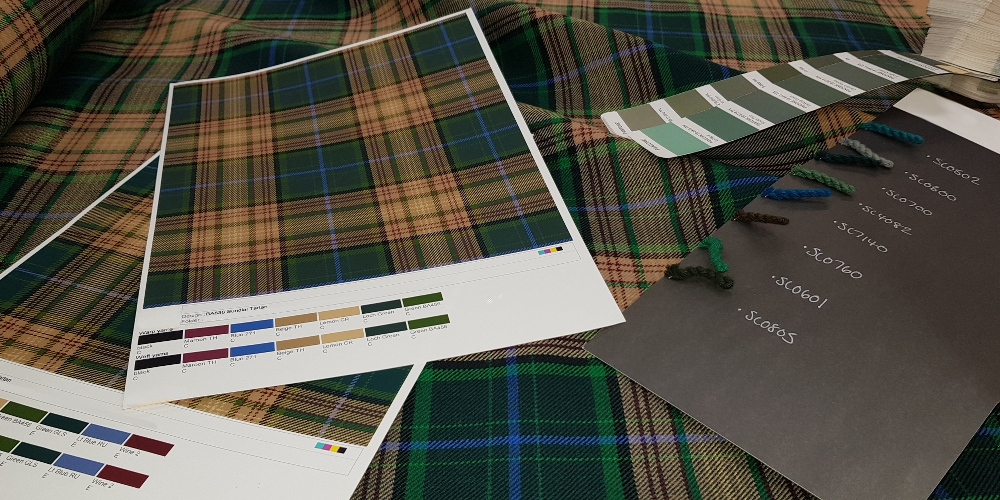
Tartan, Tweed & Fine fabrics from Kinloch Anderson
Kinloch Anderson are renowned as Experts in Tartans, Tweeds and Fine fabrics since 1868 and have played an active part in the history and heritage of tartan here in Scotland.
With our experience we can help you find the best tartan for you from thousands of choices and also provide you with top quality authentic Scottish Kilts, Highland Dress, Clothing, Accessories and Gifts.
Questions about Tartans
Q. What tartan am I entitled to wear?
A. Traditionally you start with your surname and check this against a recognised list of tartans which should include:
(a) Clans and family tartans
(b) Links of your name to other names (septs) associated with it.
(c) District or regions with which your name is associated.
Q. Can I wear tartan if I cannot find my name associated with any of those on the recognised list?
A. Yes. Tartan is a gift that we have given to the world. The idea that a man can only wear a kilt in his own family tartan or one associated with it has given way to a more broad minded approach and most ladies are quite happy to choose tartan with the colours they like best.
Q. My name doesn’t have its own tartan. What do I do now?
A. Fortunately you have many nice options but first please widen your search as much as possible to other members of both your family and those of your partner’s family etc and go as far back in family history as you like.
Also, have you or your family made visits to Scotland, as there are tartans for regions and districts and towns.
Some Christian names have a tartan associated with them e.g. Douglas, Scott, Fraser etc.
We offer our special exclusive Kinloch Anderson tartans to all our customers:- Kinloch Anderson, Kinloch Anderson Dress, Kinloch Anderson Castle Grey, Kinloch Anderson Thistle, Kinloch Anderson Heather, Kinloch Anderson Rowanberry, Kinloch Anderson Hunting, Kinloch Anderson Romance and Kinloch Anderson Black & White.
There are four recognised universal tartans: Black Watch, Stewart Hunting, Caledonia and Jacobite.
There are a number of non generic tartans e.g. Scotland’s National, Flower of Scotland etc.
Lastly choose from one of our other most popular tartans.
See our list (click below)
Q. What is the difference between a tartan and a check.
A. Essentially a tartan has a link or association with a family, clan, institution or region and has a background history explaining its relevance. Unfortunately, due to the status of tartan, some check designs are called a tartan and this causes confusion.
Q. There are so many tartans to be seen all round the world these days what gives the status of tartan its authenticity?
A. The Scottish Register of Tartans which was established in 2009 as the official Scottish Register belonging to Scotland in the public domain and located within the National Archives of Scotland.
Q. How were tartans recorded in the past?
A. Prior to the Scottish Register of Tartans there were several privately owned Tartan Registers in Scotland and these tartan records were transferred to the Scottish Register of Tartans in 2009.
Q. Can anyone register a tartan?
A. In order to enter a tartan into the Scottish Register of Tartans there is an application form with terms and conditions that need to be fulfilled.
Q. There are so many tartans - what happens if there is a duplicate design?
A. In theory no two tartans are the same and each tartan has a different thread count of colours. However, tartan belongs to culture and not to science, so similarities have indeed arisen. Today the Scottish Register of Tartans rejects any new tartan which is “confusingly similar” to an existing registered tartan.
Q. How many tartans are registered each year?
A. Somewhere around 150 tartans are registered each year.
Q. Do the words “modern” and “ancient” indicate when the tartan originated?
A. No – well not any more – they relate to the tartan colourway. There are three tartan colourways, ancient, modern and reproduction or weathered. Ancient tartans used vegetable dyes so the colours are usually quite soft.
Modern tartans were introduced using chemical dyes so the colours are brighter and reproduction or weathered tartans have colours literally reproduced to match those weathered by exposure as they were found in houses and on battle fields.
There are also colourway categories called ‘hunting’ usually with some brown and green colours and ‘dress’ usually with some white.
Q. Does a tartan have to be woven?
A. Opinions are divided on this one. Traditionally tartan belonged to clothing, household textiles and the woven fabric. The Scottish Register of Tartans insists that every tartan application must show that it is “capable of being woven” and provide colour thread counts for future weaving purposes.
Q. If my tartan is registered in the Scottish Register of Tartans does this ensure that no-one else will copy or produce it?
A. No. When you register you can request restricted use and state the details of this but copyright or patent arrangements need to be made separately.
Q. When and how did tartan begin?
A. There was no launch of tartan. It evolved over centuries so we prefer to say it belongs to the mists of time. The first written record of tartan was in an account to James III in 1471 listing “blue tartan” and the writer, George Buchanan, refers to tartan in 1582.
Most popular tartans
These are the most popular tartans that we are asked for here at Kinloch Anderson. Any of these make an excellent choice for Kilts, Skirts, Trousers and many more great tartan products.